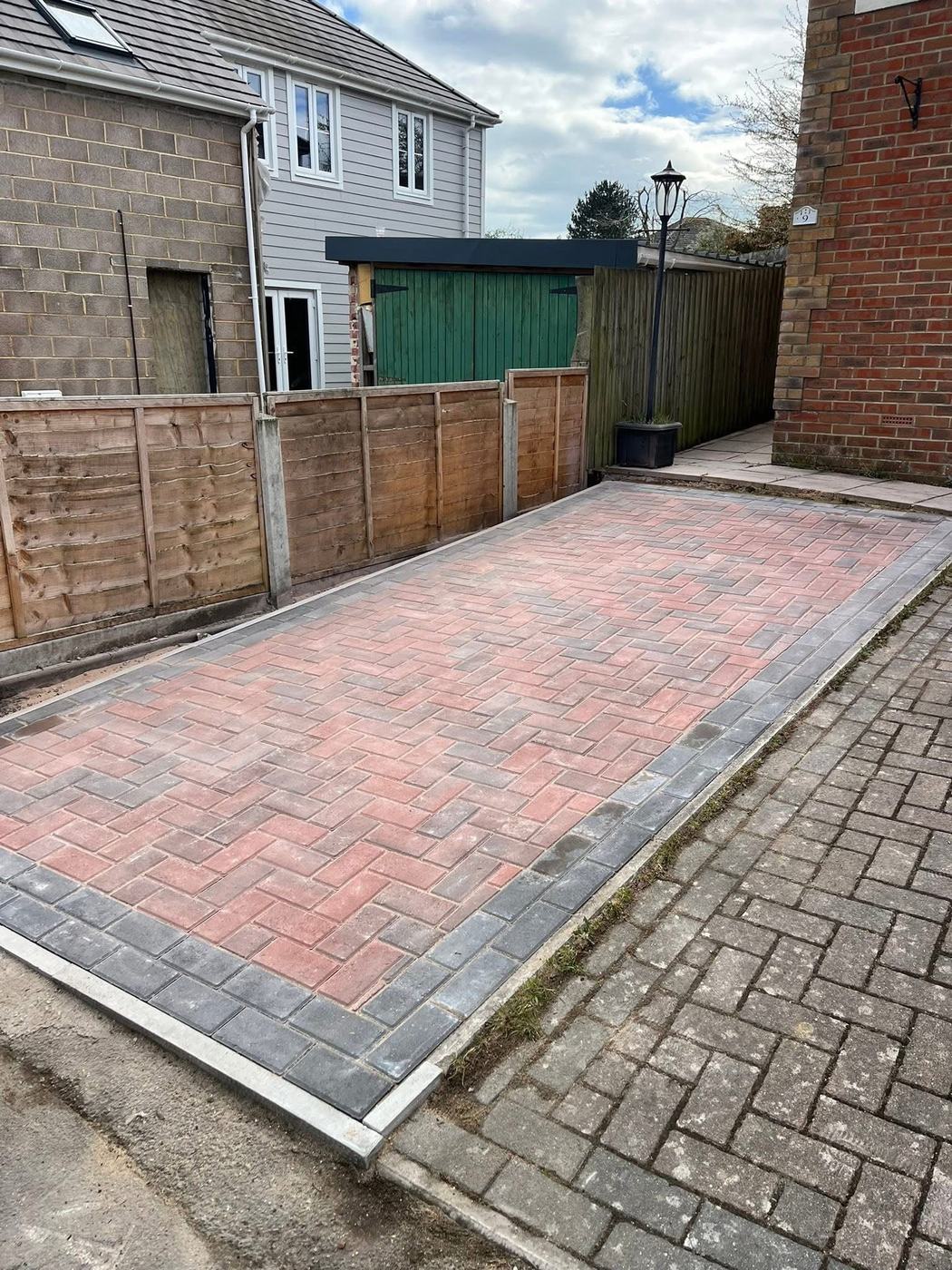
Once a block paved driveway has been down for a while, someone will usually suggest sealing it. A neighbour has had theirs done, a leaflet comes through the door, or you notice the joints filling with weeds and the colour going flat. So is sealing worth it, or is it something you can happily skip?
The honest answer is that sealing is optional. A well laid block paved driveway does not need a sealer to stay sound. But on the right driveway, at the right time, it can make it easier to keep clean and help it hold its looks. Here is how we think about it on jobs across Poole, Bournemouth, Ferndown and the surrounding towns.
What a sealer actually does
A block paving sealer is a liquid coating, usually applied with a roller or a low pressure sprayer, that soaks into the surface of the blocks and the sand in the joints. Depending on the product, it does two main jobs.
First, it binds the jointing sand. Loose sand between blocks gets washed out by rain and blown out by pressure washers, and empty joints are where weeds take hold and where blocks start to shift. A sealer that locks the sand in place keeps the joints full for longer.
Second, it makes the surface less absorbent. Oil drips, tyre marks, leaves and algae sit on top of a sealed block rather than soaking in, so they are easier to clean off. Some sealers also deepen the colour or add a slight sheen, which some people love and others would rather avoid.
When sealing makes sense
Sealing tends to earn its keep on a driveway that gets a lot of use, sits under trees, or is in a shady spot where moss and algae build up quickly. It also helps on lighter coloured blocks, where stains show up more, and on driveways where the jointing sand keeps disappearing every time it rains hard.
If you have a newer driveway, it is usually best to let it settle before sealing. Concrete blocks can show a white bloom on the surface in the early months, called efflorescence, and sealing over it can trap it in. Most manufacturers recommend waiting until that has weathered off.
When it is not worth it
If your driveway has sunken areas, rocking blocks or puddles that sit for days, sealing will not fix any of that. Those problems come from the base underneath, not the surface. Sealing a driveway with a failing base is a bit like painting over damp: it looks better for a while, but the real issue is still there. In that case the money is better spent on lifting and relaying the affected area properly.
It is also worth knowing that a sealer is not a one-off. Over time it wears, particularly in the tyre tracks, and it will need redoing every few years to keep working. If you would rather not take on that ongoing job, leaving the blocks unsealed and keeping the joints topped up with kiln dried sand is a perfectly good approach.
Getting the preparation right
Most of the problems people have with sealed block paving come from the preparation, not the sealer itself. The driveway needs a thorough clean first, with weeds, moss and stains dealt with, and the joints need to be refilled with fresh kiln dried sand and brushed in. Then, crucially, everything has to be completely dry before the sealer goes on.
Seal over damp blocks and the moisture can get trapped, leaving a cloudy or milky finish that is very hard to put right. That is why timing matters so much here in Dorset.
Why now is not the time to do it
Sealers need dry weather, both before and after they go down, and most products need the temperature to stay above a certain level while they cure. Late autumn and winter rarely give you that. Damp mornings, short days and frosty nights all work against a good finish.
So if you are thinking about sealing your driveway, the winter months are a good time to plan it, have a look at the condition of the joints and the base, and get any repairs sorted. The sealing itself is best left for a settled spell in late spring or summer.
What we would suggest
Before you spend anything, take a close look at your driveway. If the blocks are level, firm underfoot and draining well, and your main frustration is weeds in the joints or stains that will not shift, sealing could be a sensible step. If you are seeing dips, ruts or loose blocks, it is worth getting the base looked at first.
We have been laying and looking after driveways for 23 years, and we are always happy to give an honest view on whether a driveway needs sealing, a repair, or nothing at all. All our workmanship comes with a 3-year guarantee and we are fully insured.
If you are in Poole, Bournemouth, Ferndown, Broadstone or Wimborne and want a second opinion on your block paving, get in touch for a free quote.