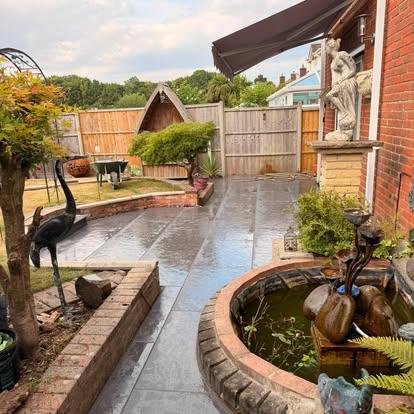
The end of summer is the best time to get your patio ready for autumn. Everything is dry, you can actually see what you're dealing with, and anything you sort now won't be sat under wet leaves for the next four months.
It's not a big job. An hour or two, once a year, is the difference between a patio that ages well and one that looks tired after three winters.
Clear the joints and the edges
Start with what's growing where it shouldn't. Weeds and moss in the joints hold water, and water sat in a joint through a frost is what lifts and cracks slabs over time.
Pull what you can by hand, scrape the joints out, and brush the whole lot off. While you're there, check the edges where the patio meets the lawn or a border. That's usually where soil creeps over and the trouble starts.
Check where the water goes
Wait for a decent downpour, then go and look. Water should run off the patio and away from the house, not sit in a pool or head for your back door.
If you've got standing water in the same spot every time, that's a fall problem, and it won't fix itself. It's worth sorting properly rather than living with it. A patio that holds water gets slippery, stains unevenly and eventually moves.
Also check your gutters and downpipes while you're outside. A blocked downpipe emptying onto one corner of a patio does more damage over a winter than the weather does.
Wash it down, carefully
A brush, some warm water and a stiff broom will do more than people expect. For anything stubborn, a patio cleaner left to work is better than brute force.
If you're using a pressure washer, keep it moving, keep the lance well back, and stay off the joints. It's easy to blast the sand or pointing straight out and turn a cleaning job into a repointing job. On porcelain you'll be fine; on softer natural stone, be gentle.
Never use a metal-bristled brush on porcelain or a sealed stone. You'll scratch the surface and those marks don't come out.
Deal with moss before it's a slip hazard
Moss on a shaded patio is the main reason people slip in winter. It comes back every year, so this isn't a one-time fix, but killing it off at the end of summer, when it's dry and easy to lift, means you go into the wet months with a clean surface.
North-facing patios and anything under a tree will need doing more often. That's just the way it is.
Leave the sealing decision alone unless you know the slab
Sealing gets recommended a lot, and it isn't always right. Some porcelain doesn't need it at all. Some natural stone benefits. Sealing a damp slab traps the moisture in and causes a haze you then have to strip off.
If you're not sure what your patio is made of, ask someone before you put anything on it.
If something's actually moved
Cracked slabs, a section that's dropped, or a joint that's opened up are usually telling you something about the base or the drainage underneath. Lifting and relaying that area properly is the fix. Patching over the top just hides it until next year.
If yours has started moving and you'd like someone to look at it, give us a ring. We'll tell you whether it's a small repair or whether the base underneath has had it, and we'll be straight with you either way.